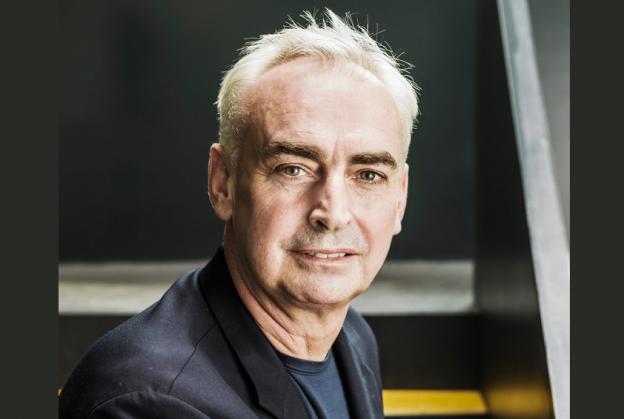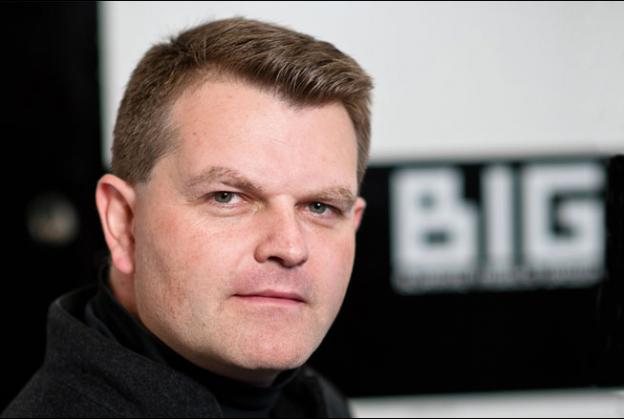
Peter Chmiel – Director, Grant Associates
We were thrilled that Appleby Blue Almshouse won the RIBA Stirling Prize 2025 and the Neave Brown Award for Affordable Housing. It is a remarkable achievement and testament to the vision and commitment of our client, United St Saviour’s Charity, and Witherford Watson Mann Architects - not only to the project itself, but also to the wider ambition of creating exemplary, inclusive, and compassionate housing for later living in central London.
During the early stage of the project, our project director, Keith, visited the charity’s existing almshouse community at Hopton’s Almshouses in Southwark, where residents explained the role of the garden for them. They spoke of the importance of seasons, the joy of watching birds and wildlife, space to garden and a sense of a mini-oasis, while still living in the heart of the city. We advised that it is vital for the almshouse experience to feel comfortable for visitors. With loneliness and social isolation on the rise, the almshouse should also appeal to families with young children, seeing their elderly relatives. It was important for us to create inviting social spaces and gardens for the whole family.
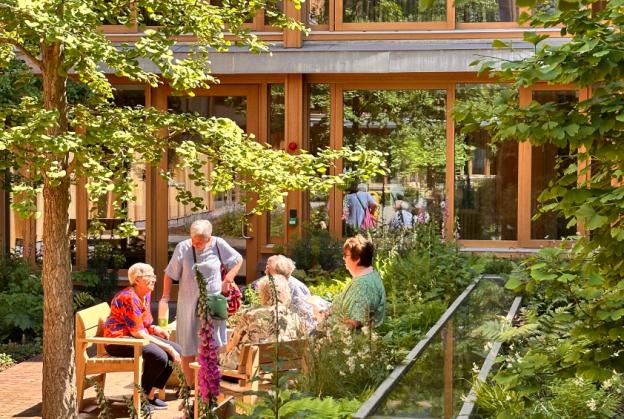
The landscape concept is the idea of time and seasonality, as reflected in the two primary garden spaces. The gardens frame the living environment at different levels, bringing the changing colours, textures, sounds and light of the seasons into the residents’ and local community’s everyday experience. Conceived as an abstract woodland glade, the Garden Court provides direct and indirect views of the garden spaces as you move through and around the building, with a raised and gently cascading linear water feature running between a grove of gingko trees, and an under-storey of seasonal woodland flora including ferns, sedges, hellebores and foxgloves.
How do you think the strong presence of nature supports residents, visitors, and, in fact, everyone in general?
Research studies show how gardening benefits the wellbeing of communities, from reducing stress and lowering disease risk to increasing life satisfaction and promoting learning. We were keen to enable this on the second-floor roof terrace, where there is more direct sunlight and residents can enjoy views. The Productive Garden features a series of interconnecting raised beds for growing herbs and vegetables, fruits and companion planting. Raised beds, using pre-cast board-marked concrete, have enabled recreational gardening activities to maintain accessibility despite residents’ potential loss of mobility.
Some of the beds were left prepared for residents to garden, while others were planted with a mix of fennel, rosemary, thyme, sage, mint, marjoram, wild strawberry, rhubarb, as well as local apple and pear tree varieties. Adjacent to the raised beds, potting tables and storage spaces for residents’ gardening tools make it comfortable and practical.
Speaking personally, what is your favourite aspect of the scheme?
My favourite aspect of the scheme is the Garden Court, enclosed by the warmth of the oak frame and generous windows, and linking directly to the double-height indoor Garden Room. The changing colours, textures, sounds and light of the seasonal garden are brought into the residents’ everyday experience. The acoustics of the Court, coupled with the sound of the water feature, create a sanctuary space for socialising and relaxing in peace and quiet.
Where does the unusual name Appleby Blue stem from?
The name celebrates the memory of one of United St Saviours Charity’s original benefactors, Dorothy Appleby. ‘Blue’ refers to the central marketplace of Bermondsey, rooting the development in its locale, and noting the charity’s ties to the area going back more than five hundred years.
Of course, this is not the first time Grant Associates has been part of a Stirling Prize-winning project. In 2008, the accolade went to the Accordia housing scheme in Cambridge. It was the first housing development to win the prize and is widely regarded as a new benchmark and step-change for large-scale housing in the UK. What part do you feel your landscape design played in its success?
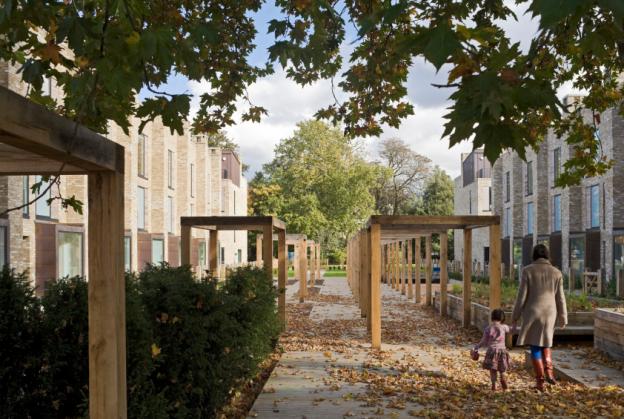
Appley Blue and Accordia awards are a testament to both the clients’ and design teams’ shared vision and successful collaboration. At Accordia, we worked closely with the masterplan architects and fellow Tenderstream member, Feilden Clegg Bradley Studios, to create a landscape-focused masterplan. A holistic and sustainable approach to placemaking, the masterplan balanced buildings with the public realm to ensure that every home overlooked green space, giving the sense of ‘Living in a Garden’. Over 700 mature trees, incorporating a network of new communal green spaces, productive gardens, and a "nature walk" along the Hobsons Conduit, make up approximately 40% of the site, thus creating a strong connection between homes and nature.
Both architecture and landscape focus on the concept of shared space, shared views and shared experience. It is about the collective enjoyment of the environment for residents and visitors alike. The houses at Accordia do more than mark out a place which means home, they also mark out spaces - garden streets, mews, play courts, forest gardens, roof terraces, large balconies, and a central community garden - that carry an association with other people, and in doing so foster a sense of community.
In the summer of 2022, the Tower of London was encircled by your Superbloom project, an enchanting meadow of wild flowers and installations that allowed visitors to meander through nature in the heart of London. What was the gist of the original brief by Historic Royal Palaces, and how did the public react to your interpretation of it?
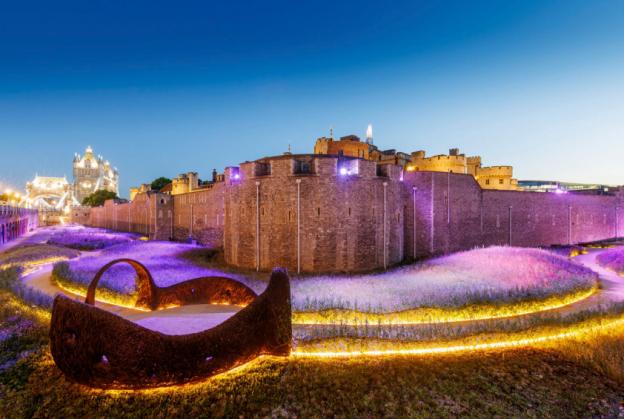
The Superbloom project grew out of Historic Royal Palaces' desire to mark Queen Elizabeth II’s Platinum Jubilee. We were awarded the project following a competition and brought in Nigel Dunnett to advise on the seed mixes needed to deliver a spectacular flowering display in the Moat surrounding the Tower of London throughout the summer of 2022.
Until Superbloom, the Moat had limited access and was primarily a large area of mown amenity turf, allowing occasional pop-up events, but very little interpretation of the Moat and its extraordinary history. The project provided a proper paved route around the Moat through a sequence of experiences, allowing visitors to enjoy the wonderful views and be close to the Tower Walls, all within a field of flowers. Extra fun was provided by allowing visitors to enter the Moat by a giant slide or down a new accessible ramp.
The Moat was then punctuated with artworks and structures made from woven willow. The overall experience was greatly enjoyed by visitors, inspiring HRP to explore a long-term legacy solution for the Moat that would deliver a year-round visitor experience through a matrix of new habitats. These include wetlands, to deliver a more sustainable and biodiverse setting to the Tower.
Airports can be stressful places. How did Grant Associates use nature at Terminal 2 - Kempegowda International Airport in India to soften and enhance the passenger experience?
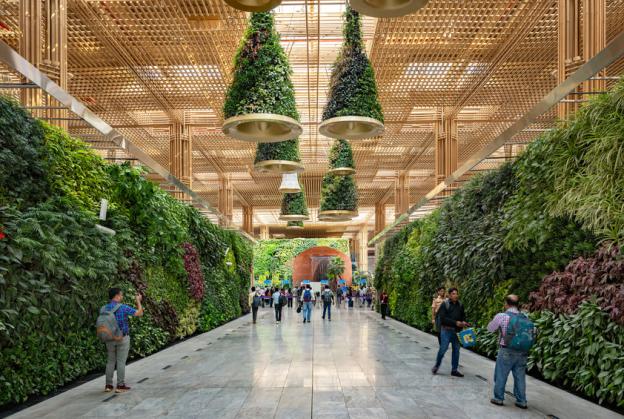
Bangalore is known as the Garden City of India, and our client wanted Terminal 2 to reflect that garden heritage while also introducing passengers to the wider landscapes, plants, and biodiversity of the Karnataka region. Working with Tenderstream member Skidmore, Owings and Merrill (SOM), we developed the Terminal in a garden concept in which every stage of the passenger journey through the airport would be marked by a landscape or nature-based experience. The architecture became a calm and spacious backdrop to the various landscape and art interventions that punctuate the journey.
A key feature of the masterplan is the Forest Belt, which wraps around the core terminal building and creates a buffer between the check-in, departure lounges, and retail areas and the perimeter piers and gates. This zone is planted with many native plant species of the region, including some rare specimens. In effect, it has become a botanical garden for the city. Passengers cross this zone to reach their flights, and it provides a calming sense of nature at this key departure or arrival moment.
Internally, a lot of focus was placed on creating appropriate conditions for plants to thrive without compromising the operational, security and human comfort requirements of the spaces. Perhaps the most striking features are the lines of hanging planted bells that extend from the check-in hall to the security check zone, providing a clear wayfinding reference, whilst being dramatic features within the space.
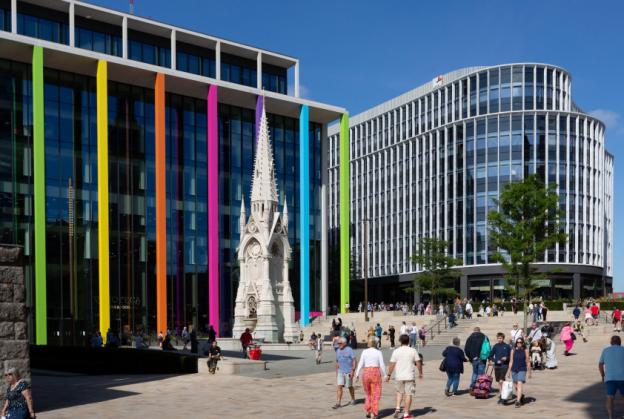
In Birmingham, Grant Associates collaborated with Glenn Howells Architects on the masterplan for Paradise, a major city-centre public realm regeneration project. What was the area like before? And for you, what are some of the most significant improvements and transformations that are being developed?
Transport-focused urbanism of the post-war years had disconnected the city centre from a ring road. Before the public realm regeneration project, roads almost completely severed pedestrian flows into the city centre. Although benefitting from an amazing collection of 19th century architecture and features - including the Town Hall and Chamberlain Memorial - the public realm was disconnected and hindered by steep gradients, and inconsistent materials with a somewhat exposed or shaded microclimate.
Paradise has been a truly transformational project to work on. It is the latest chapter in Birmingham’s compelling story, and many would consider it to be the most important development that the city has seen in a generation; a place where commerce and culture can come together in harmony to create a new urban neighbourhood - right in Birmingham’s civic and historic heart.
Collaborating with Glenn Howells Architects on the masterplan, the landscape proposals significantly improved accessibility, natural wayfinding, microclimate enhancement, urban greening and supported the thoughtful blending of existing heritage and new architecture. The landscape strategies create environments that are convenient and enjoyable for everyone, recognising that streets must be social spaces, not just spaces for moving through, with a heavy emphasis on place-making that contributes towards making better streets and spaces for people and public life.
Paradise has provided the opportunity to reinstate Chamberlain Square as a place for the city and the Midlands, a dignified and delightful gathering place that meets the flexible needs of the city and its people. We are very proud to see this key public space being so well used and enjoyed.
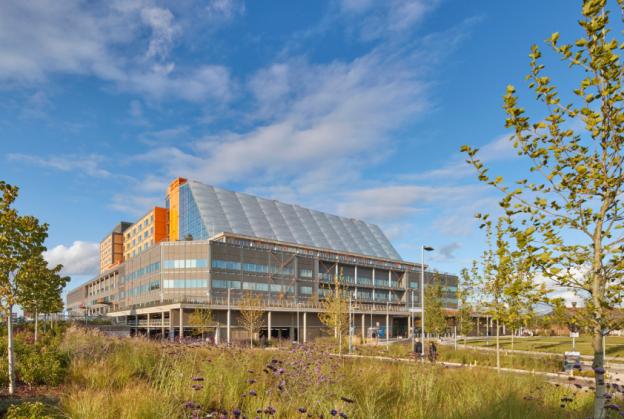
Grant Associates’ landscape vision for Midland Metropolitan University Hospital in West Birmingham is ‘centred around biophilic design, connecting people with nature to support physical and mental health’. How have you gone about this?
The hospital, designed by HKS, Cagni Williams, and Sonnemann Toon Architects for Sandwell and West Birmingham NHS Trust, revolutionises healthcare delivery in the region. It combines cutting-edge medical facilities with a restorative and sustainable landscape. It’s a tightly confined site, and to support a biophilic response, the client and design team recognised that the landscape integration and interventions across multiple levels of the hospital were an essential design focus.
The boundary landscape and roof terraces incorporate a narrative on the adjacent canal-side and important habitats and species. The wards and internal circulation arrangements allowed for views onto landscaped courtyards, terraces and extensive roof gardens, and, in doing so, supported a strong inside/outside relationship. Importantly, this visually connects this large building to its natural surroundings. Landscape strategies include promoting active, healthy lifestyles, encouraging biodiversity, and creating spaces that are welcoming, inclusive, and therapeutic.
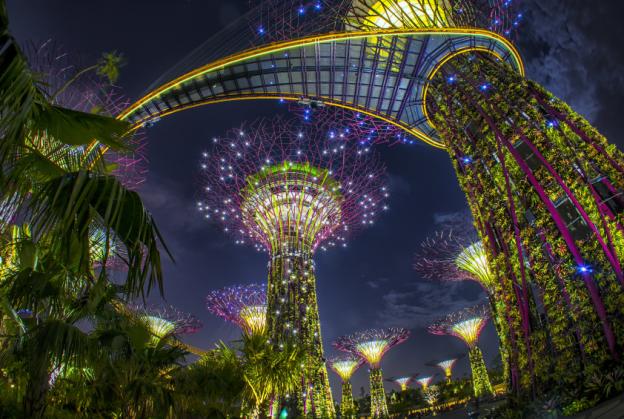
Grant Associates led a multiple-award-winning team (including Tenderstream member Wilkinson Eyre as architect) for the design of Gardens by the Bay in Singapore. The project was described by Sir David Attenborough in his Planet Earth 2 series as ‘perhaps the most spectacular example of city greening’. The masterplan was inspired by Singapore’s national flower, the orchid, but what lay behind the design of the futuristic Supertree Grove?
The Supertree Grove was partially an idea to create spectacular landscape features at the heart of the gardens as a counterpoint to the dramatic glasshouses on the waterfront. We knew these features would need to have height and visual impact to compete with the emerging scale of high-rise buildings. The design concepts for these structures were influenced by several references.
Our founder, Andrew Grant, visited the Valley of the Giants in south west Australia just before we developed the competition ideas and was very taken by the way the giant Karri trees emerge above the surrounding eucalyptus forest. These inspired the scale and clustering of the Supertrees, and the Valley of Giants also features a dramatic aerial walkway, which we echoed in our designs for the Supertree Grove and the Cloud Forest Dome.
Another influence was the Studio Ghibli film ‘Princess Mononoke’, which introduced the idea of a special, magical space at the heart of the Grove that transforms between a beautiful natural forest by day and a colourful, glowing spectacle at night. This nighttime experience has become a feature of the gardens, attracting 5,000-10,000 visitors every evening for a free sound and lighting experience where the viewers are immersed and surrounded by the spectacle.
Moving on to Grant Associates itself, you joined the Bath-based studio in 1997 and became a director in 2005. For you, what three words best describe the fundamental ethos of the practice, and why?
Collaborative. We love working with like-minded people and believe close collaboration with clients, architects, engineers, and artists encourages diverse perspectives and the constructive dissent crucial for successful outcomes, including innovation and truly holistic design.
Insightful. The ethos of Grant Associates is built on connecting people with nature through innovative design while addressing global challenges such as urbanisation and climate change. We believe sustainability and climate resilience are fundamental, not optional extras. Our designs focus on longevity and ensuring landscapes mature beautifully, whilst often retaining existing natural features (such as mature trees) and repurposing materials to give them a new life.
Delightful. We advocate injecting a sense of ‘natural wildness’ into urban life to help people connect with the planet's rhythm and ‘lift the spirit’ through beautiful, experiential landscapes. While playful and inventive, our approach prioritises creating spaces with purpose and identity that promote health, well-being, and a healthy, biodiverse ecosystem.
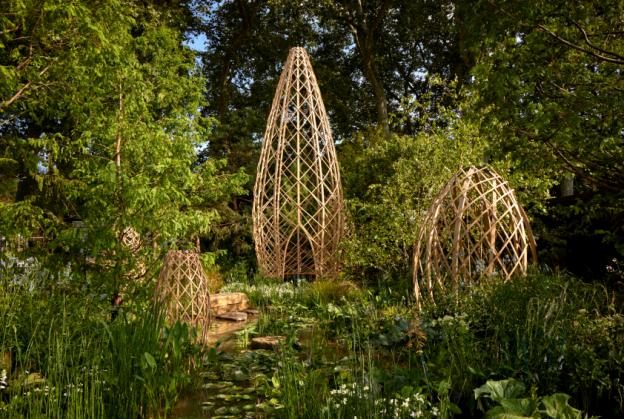
Along with fellow designer Chin-Jung Chen, you made your own personal debut at the RHS Chelsea Flower Show in 2021 and scooped Gold and the coveted Best in Show award for your Guangzhou Garden design. That was quite an achievement for a first time at the Show! What were some of the key elements of the design? What were you trying to achieve, and what do you think impressed the judges so much?
Thank you. It was one of my life ambitions to design a large show garden at the RHS Chelsea Flower Show. Given that it was to be my debut show, I wanted to share the experience and, to be truthful, also the stress! Chin and I have worked together as landscape architects for over 17 years, and, as expected, it was a great experience.
Initiated by the Administration of Forestry and Gardening of Guangzhou Municipality, the garden drew inspiration from our study tour of the city. A visit to the Guangzhou Urban Planning Exhibition Centre - a public exhibition, training, and education centre located next to Baiyun Mountain - provided insight into Guangzhou's history and future plans for transportation, architecture, and environment.
We then visited three distinct environmental zones aligned centrally north to south across the city. The first was Baiyun Mountain, a protected Northern Forest and tourist attraction known for its scenic views, wildlife, and hiking paths with stunning views over the city. Baiyun Mountain is known as the "city lung" and is recognised for its air purification and wellness benefits.
We then visited the CBD in the Tianhe District, with its linear gardens that connect to the Pearl River and provide a wildlife corridor into the ‘’social heart’’ of the city, reconnecting people and nature.
Our final visit was to Guangdong Haizhu National Wetland Park. The wetlands feature unique historical dyke-pond systems that integrate agriculture (fruit trees) and aquaculture, though their primary function has shifted to water purification and leisure/ecotourism for city residents.
Our garden layout, inspired by the three city zones, personifies the human body's functions by linking three zones of the garden to key organs: the green lung, the social heart, and the blue kidneys, to highlight the importance of ecological processes for healthy urban environments.
Public comments during show week and on media viewing were ‘’the garden just keeps drawing you back for another viewing, it’s so serene, green, immersive and delightful’’. The judges were also impressed by the thoughtful integration of technology and sustainability, such as the active air wall, 3D-printed wood pulp wildlife features, and laminated bamboo structures.
However, I think James Alexander-Sinclair, RHS Chair of Judges, captures the spirit of the garden best: '’Guangzhou Garden is a garden that has real heart and soul to it. The combination of tall airy spaces, babbling waters and layers of cool green plantings cannot fail but to soothe even the most harried soul.’'
You studied landscape architecture at Greenwich University, graduating in 1987. What led you there – why landscape architecture?
In 1981, I started working as a drafting technician for a small architecture practice on the edge of Dartmoor National Park. The landscape design aspects of the many housing schemes were always delegated to my desk. In fairness, I really enjoyed the challenges of integrating the architectural proposals into the wider landscape setting. In 1981, everything was hand drawn and planting design errors took a long time to erase, so I decided to go and learn to do it correctly!
Greenwich University had a great tutor group, including Tom Turner, garden designer and historian, and Michael Lancaster, who had a special interest in design with colour, and campaigned for an informed use of colour in all areas of design. Michael’s Colour Guidelines, found in his many books, are a lasting contribution to the subject for architects, landscape architects, and urban designers. I believe it is still a very design-focused course with strong industry links, a practical focus, and good attention to planting design.
We hear you are keen on fishing and field archery outside of work. Have you always been an outdoor person? What has been your favourite adventure so far, and why?
My desire to connect with the natural world has always steered my life, including my choice of profession in landscape architecture, my choice of home on the edge of Salisbury Plain, and the pursuit of my key hobbies: fishing, field archery, and wildlife photography. Growing up on Dartmoor fuelled my passion for the natural environment, and from the age of seven I enjoyed fishing and discovering the wonders of the local clay pits, temperate rainforests, tumbling moorland rivers, and mystical granite quarries.
My favourite adventure is always my next adventure. A wonderful philosophy! I believe the thrill of anticipation for new experiences, discoveries, and challenges is a powerful motivator, driving me forward in life. That said, fishing for Mekong catfish in Thailand, eagle spotting in the remoteness of the Scottish Highlands, hiking and photographing lemurs in Madagascar, and a hiking trip to see the Rafflesia flower in Borneo are some of my more adventurous and memorable journeys. They provided me with a sense of solitude and allowed me to discover nature at its very best.
And finally, Grant Associates has been a member of Tenderstream since 2011, some 13 years now. What is it that makes our service valuable for your firm?
How time flies. Over the last 13 years, our work portfolio has become increasingly international in both type and location. We are always looking for new opportunities and adventures - whether that is through collaboration as part of a wider multidisciplinary team, or seeking landscape-focused projects in a new region.
A daily review of Tenderstream gives us a quick heads-up on all new bids and lets us filter by regions or work types, so we can review a saved list of potential interest. Tenderstream details often include additional links that allow us to quickly access more detailed information and data when they’re relevant and align with our skills and resources.
As a member, we also have links to the news feed, and I particularly enjoy reviewing the results on global competitions and project awards.
Thank you.
Interview by Gail Taylor, Features Editor
IMAGE CREDITS
1 - Appleby Blue Almshouse
2 - Accordia housing scheme
3 - Superbloom
4 - Terminal 2 - Kempegowda International Airport
5 - Paradise
6 - Midland Metropolitan University Hospital
7 - Gardens by the Bay
8 - RHS Chelsea Flower Show